

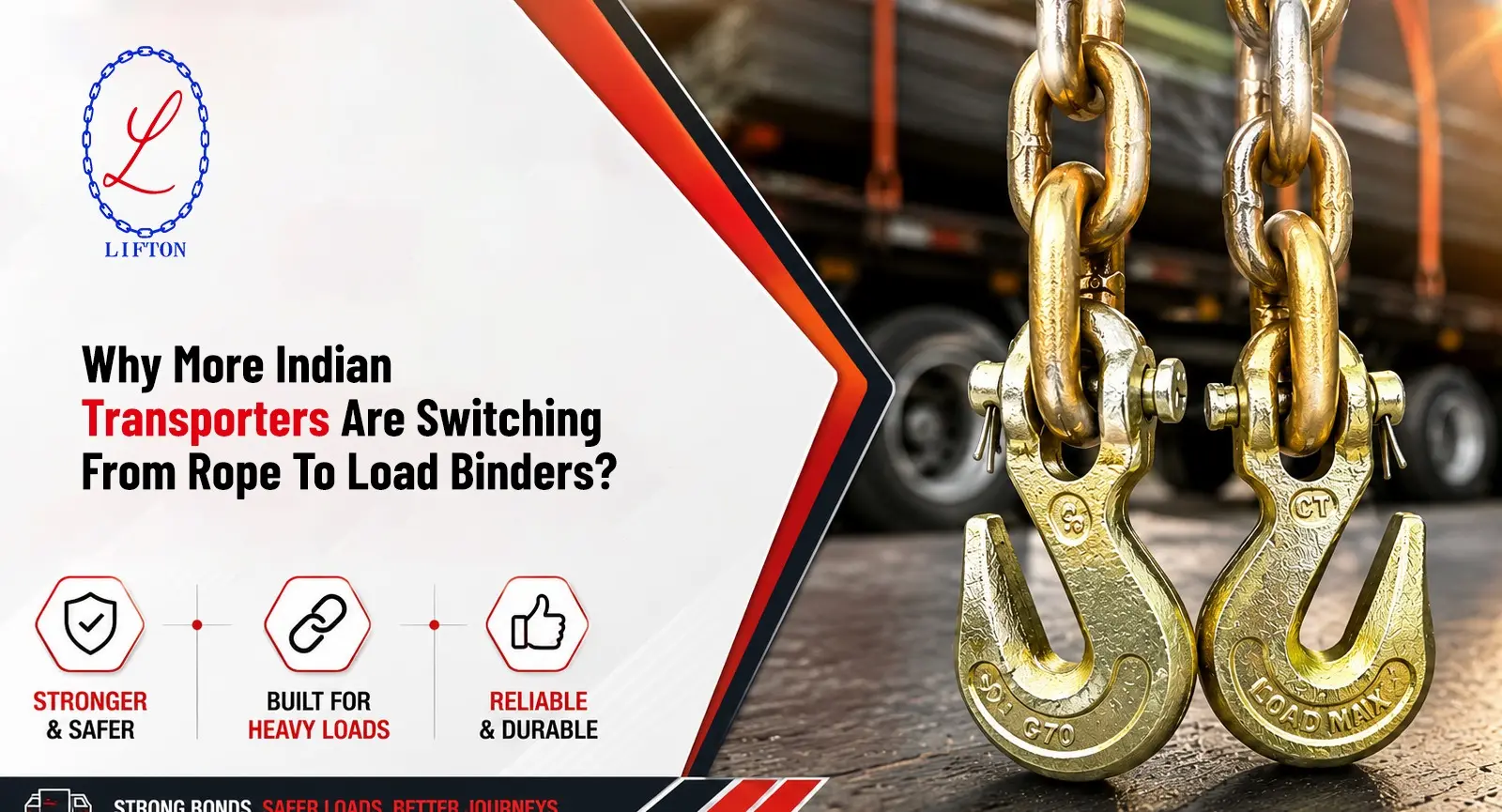
Why More Indian Transporters Are Switching From Rope to Load Binders?

Introduction
Walk past any highway truck stop in India and you’ll see the same thing — loads tied down with rope, sometimes jute, sometimes nylon, knotted and crossed and hoping for the best. It works until it doesn’t. And when it doesn’t, the consequences range from a shifted load that damages goods to a completely unsecured load that comes off the vehicle at speed. Cargo securing in Indian transport has lagged behind where it needs to be — not because better solutions don’t exist, but because rope is what everyone knows. That’s slowly changing, and the load binder is at the centre of that shift.
What Is a Load Binder and How Does It Work?
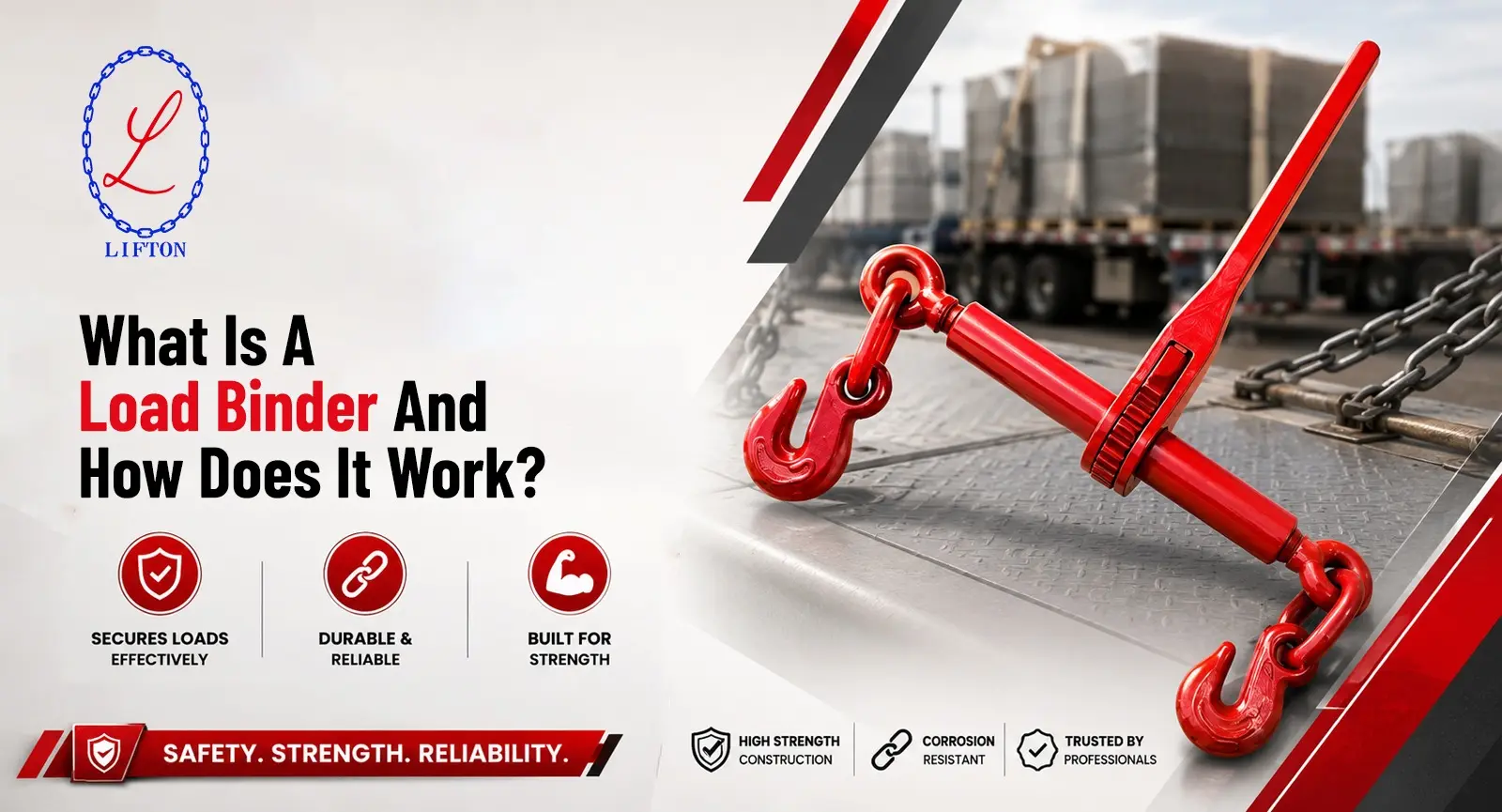
It is a mechanical device used to tension a chain that’s securing a load on a flatbed trailer, truck, or any open transport vehicle. It is also called a chain binder or chain tensioner. The binder connects to the chain at both ends and provides a mechanical advantage to pull the chain tight and lock it in position.
The basic working principle is straightforward:
- A chain is run over or around the load and hooked at both ends to the vehicle’s anchor points
- The load binder connects into the chain and, using either a lever or ratchet mechanism, tensions the chain until it’s taut
- Once the required tension is achieved, the binder locks in place and holds that tension throughout the journey
Unlike rope, which stretches, loosens with vibration, and degrades with weather and repeated use, a properly tensioned chain and binder combination maintains its holding force across the full journey — regardless of road conditions, speed variations, or temperature changes.
Why are Ropes Replaced by Load Binders?
Rope has been the ideal choice for cargo securing in India for decades. The reasons are understandable:
- It’s cheap and widely available at any hardware shop
- Truck drivers have known how to tie loads with rope since they started driving
- No special tools are needed
- It’s lightweight and easy to carry
But rope comes with serious limitations that become more significant as cargo values increase, haul distances get longer, and road standards improve:
- Rope stretches — even a small amount of stretch under load means the cargo can move, shift, and damage itself or other goods
- Knots loosen under vibration — a knot that feels tight at the loading bay will be noticeably looser after 200 kilometres of highway vibration
- Rope degrades fast — UV exposure, moisture, repeated loading, and friction all reduce rope strength far quicker than most transporters account for
- No measurable tension — you can’t quantify how tight a rope is, which means there’s no way to know if it’s actually securing the load adequately
- Failed loads cost more than saved rope — damaged goods, insurance claims, accidents, and regulatory penalties add up quickly
The Indian transport sector is carrying increasingly valuable cargo — automotive components, industrial equipment, construction machinery, steel — and the risk profile of losing or damaging a load has gone up significantly.
How Do Load Binders Work Differently?
A binder paired with a chain solves the specific problems that rope creates.
Consistent and measurable tension
A chain doesn’t stretch. Once the binder has tensioned the chain to the required level, that tension stays. There’s no loosening from vibration, no creep under sustained load, and no guessing about whether the cargo is actually secured.
Known working load limits
Every binder has a rated Working Load Limit stamped on it. Every chain has a grade and WLL. This means the total securing capacity of the system can be calculated and matched to the cargo weight — something rope systems simply can’t provide.
Longer working life
A quality chain and load binder, maintained properly, lasts years. Rope, particularly when exposed to weather and UV, degrades and needs replacing far more frequently than most people replace it.
Faster securing and releasing
Ratchet load binders in particular can tension a chain and lock it quickly, then release it just as fast. For drivers doing multiple deliveries or loads per day, the time saving adds up.
Better compliance with transport regulations
As enforcement of cargo securing standards tightens in India, transporters using measurable, rated securing equipment are in a much stronger position than those using rope with no documented capacity.
What Transporters Are Actually Experiencing After Switching to Load Binders?
The feedback from transporters who have moved from rope to chain binders is consistent across the board:
- Fewer damaged goods claims — loads that don’t shift don’t get damaged
- Faster loading and unloading — ratchet binders are faster than tying and untying complex rope knots
- More confidence on long hauls — drivers know the load is secured and doesn’t need checking and retightening at every stop
- Better compliance — carrying rated equipment with documented WLLs makes conversations with weighbridge and enforcement officials straightforward
- Lower long-term cost — chain and binders last far longer than rope that’s constantly being replaced
The switch doesn’t happen overnight because old habits in any industry take time to change. But for transporters carrying higher value or heavier freight, the business case for switching is straightforward.
Conclusion
Lifton Chains And Tackles Private Limited manufactures and supplies load binders, transport chains, and cargo securing equipment for Indian transport, logistics, and industrial applications — with products rated to international standards, bulk supply options, and technical support for specification and selection.
Frequently Asked Questions

Lifton Chains & Tackles
Since 2020, Lifton Chains and Tackles Pvt Ltd has been manufacturing premium-quality Industrial Chains. Our lifting equipment is in high demand as they can easily lift heavy materials.
