

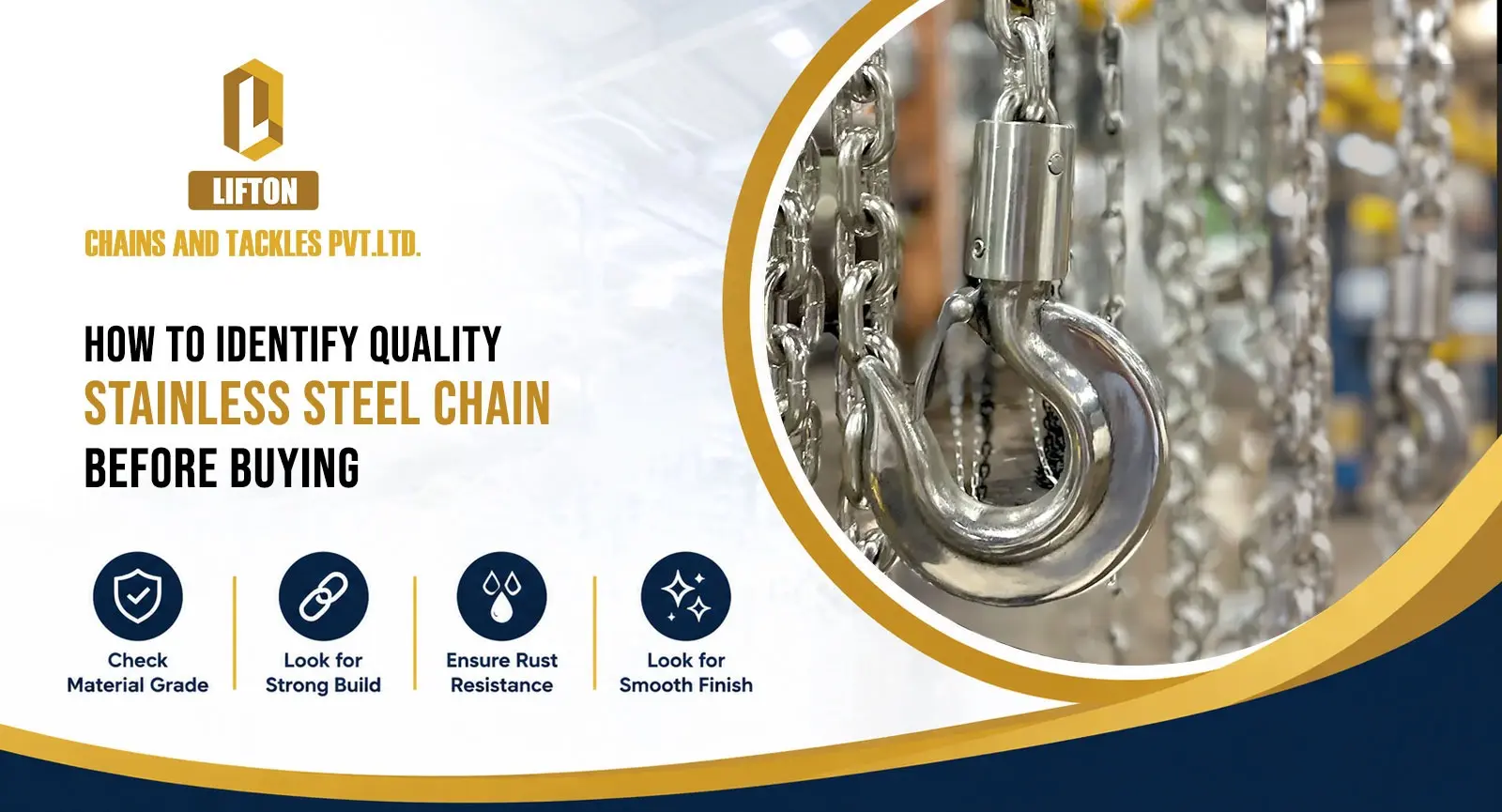
How to Identify Quality Stainless Steel Chain Before Buying

Overview: A stainless steel chain can look shiny and new sitting on a shelf and still turn out to be poor quality, since the surface shine tells you nothing about the actual grade of steel, the weld strength, or how evenly the links were made. A stainless steel chain made from the wrong grade can start rusting within months near salt water, a rough weld can crack under repeated load, and links that are not sized consistently can wear unevenly and stretch faster than the rest of the chain. This blog goes through the specific checks worth doing before you buy, so you do not have to depend on trust alone.
This blog covers
Introduction
A stainless steel chain is usually bought for one main reason: it needs to resist corrosion in places where a regular steel chain would rust and fail. But not every stainless steel chain does this job equally well, and a buyer who only checks the price ends up learning the difference the hard way, usually after the chain has already started showing rust spots or stretching under normal load. A few checks done before buying save this trouble later.Check the Grade Marking First
The grade of steel used is the single biggest factor in stainless steel chain strength and how well it resists corrosion, so this is the first thing worth confirming.SS304 is the more common grade, offering good general corrosion resistance for most indoor and light outdoor use. SS316 costs more but holds up much better in marine environments, chemical exposure, or anywhere the chain will regularly come in contact with salt water or harsh cleaning agents. A supplier who cannot tell you clearly which grade you are buying, or who is vague about it when asked directly, is not someone worth trusting with this purchase. A genuine chain usually carries some form of marking or documentation confirming the grade, and asking to see this before buying is a fair request, not an unusual one.
Look Closely at Finish and Weld Quality
The surface finish and the weld at each link tell you a lot about how the chain was actually made, and this is something you can check with your own eyes before buying.A good-quality stainless steel chain has a smooth, even finish across every link, without visible pitting, rough patches, or discolored spots that hint at a lower-grade steel or poor processing. The weld point on each link should be smooth and properly closed, since a rough or slightly open weld is a weak point that can crack under load over time. Running your fingers along a length of chain, if a sample is available, often tells you more than just looking at it, since rough welds and uneven surfaces are easier to feel than to see.
Check Link Size and Pitch Are Consistent
Every link in a length of chain should match in size and spacing, and even small inconsistencies here point to a manufacturing process that is not being controlled properly.Measure a few links at different points along the length and compare the diameter and pitch, the distance from the center of one link to the next. A chain with links that vary noticeably in size was likely not made with consistent quality control, and this inconsistency can mean some links carry more load than others once the chain is actually in use. This matters just as much for stainless steel chain quality as the grade of steel itself, since a chain made from good material but poor manufacturing can still fail early.
Ask for Load Rating and Test Certificates
A genuine load rating, backed by an actual test certificate, is one of the clearest signs you are dealing with a reliable stainless steel chain supplier.The working load limit should be clearly stated for the chain you are buying, based on its diameter and grade, not just a general assurance that it is strong enough. Ask whether the batch has been proof tested and whether a certificate is available for that specific batch than a generic document reused across different orders. A supplier who readily gives this documentation, without any fuss or excuses, is generally more trustworthy than one who ignores the request.
Match the Stainless Steel Chain to Where It Will Be Used
Not every Stainless Steel Chain grade suits every environment, so matching the chain to its actual working conditions matters just as much as checking its quality on its own.For marine use, docks, or anywhere near seawater, SS316 is generally the safer choice since it resists chloride corrosion much better. For food processing or pharmaceutical settings, hygiene and ease of cleaning matter alongside corrosion resistance, and a smooth, well-finished chain is easier to keep clean than one with rough surfaces where residue can collect. For general industrial or agricultural use, SS304 usually covers the requirement well without the added cost of SS316.
Signs of Poor Quality to Watch For
A few warning signs are worth remembering, since spotting them early avoids buying a stainless steel chain that will not hold up.A chain that shows rust or discolouration before it has even been used is a clear sign of poor-quality steel or improper processing. Links that feel slightly rough, sharp-edged, or unevenly finished suggest rushed manufacturing. A price that seems noticeably lower than every other supplier for the same stated grade and size is often a sign that something has been compromised, whether in the actual grade used or in the manufacturing process itself.
Get In Touch With Lifton Chains
Lifton Chains and Tackles Pvt Ltd manufactures stainless steel chains in SS304 and SS316 grades, built for marine, food processing, lifting, and general industrial use, with consistent link sizing and finish across every batch. Established in 2020 and based in Navi Mumbai, Maharashtra, the team can help you confirm the right grade and specification for your actual application before you place an order.Frequently Asked Questions
What is the main difference between SS304 and SS316 stainless steel chains?
How can I tell if a stainless steel chain is genuine and not a lower grade sold as SS316?
Asking for mill test certificates or grade documentation from the supplier is the most reliable way, since these confirm the actual chemical composition of the steel used rather than relying on a verbal claim alone.

